Mud, Hooves, and Thrush: Spring Horse Hoof Care Essentials
Simple seasonal hoof care practices can help keep horses comfortable, sound, and ready for spring riding.
As winter fades and pastures begin to thaw, horse owners often find themselves dealing with a familiar seasonal challenge: mud. Melting snow, frequent rain, and soggy pastures create damp conditions that can affect hoof strength and promote infections. Without proper care, horses may develop problems such as soft hooves, cracks, or the well-known hoof condition called thrush.
Fortunately, with a few seasonal adjustments to your care routine, you can help your horse stay comfortable and sound throughout the muddy months.
Why Spring Is Hard on Hooves
Horse hooves are incredibly strong, but they are still affected by their environment. During winter, frozen ground can make hooves hard and sometimes brittle. When spring arrives, those conditions change quickly.
Moisture softens the hoof wall and sole. When hooves remain wet for long periods, they become more vulnerable to wear and damage. Mud can also pack into the hoof and create an environment where bacteria thrive.
Another common issue during spring is the constant cycle of wet and dry conditions. Hooves may absorb moisture during rainy weather and then dry out when the sun appears. This repeated change can weaken the hoof structure and lead to cracks or flaking.
The Risk of Thrush in Wet Conditions
Thrush is one of the most common hoof issues that appears during spring. It is a bacterial infection that affects the frog, which is the V shaped structure on the underside of the hoof.
Thrush thrives in damp, dirty environments. Mud mixed with manure creates the perfect setting for bacteria to grow. If the hooves are not cleaned regularly, the infection can develop quickly.
Early signs of thrush include a strong unpleasant odor and a black discharge around the frog. The frog tissue may also appear soft or ragged. In more serious cases, the horse may become sensitive or uncomfortable when pressure is applied to the hoof.
The good news is that thrush is usually easy to manage when caught early. Regular hoof cleaning and a clean environment are the most effective forms of prevention.
Daily Hoof Picking Makes a Big Difference
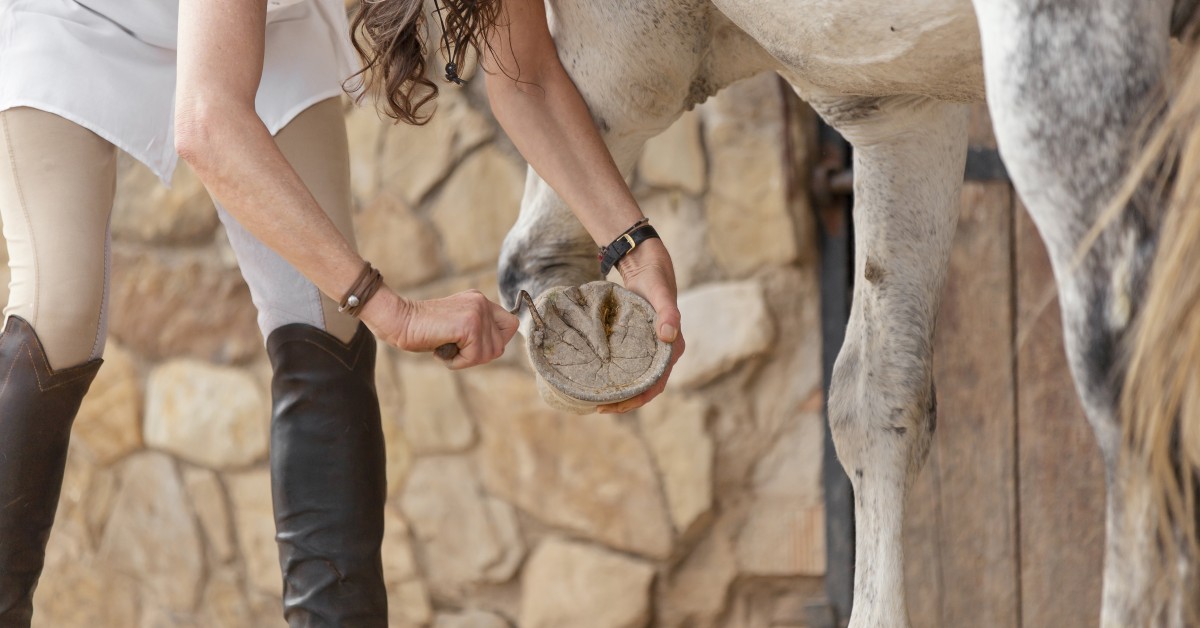
One of the simplest ways to protect your horse’s hooves during spring is also one of the most important. Picking out the hooves every day helps remove mud, manure, and small stones that may become trapped.
Cleaning the hooves allows air to reach the frog and sole, which helps reduce the moisture that bacteria love. It also gives you the chance to inspect each hoof for changes or early signs of problems.
While cleaning, look for unusual smells, dark discharge, cracks, or small injuries. Catching these issues early makes them much easier to treat.
Managing Mud in Pastures and Paddocks
Although mud is almost unavoidable in spring, there are ways to reduce its impact. Managing wet areas in your horse’s turnout space can greatly improve hoof health.
High traffic areas such as gates, water troughs, and feeding spots tend to be the muddiest places in a pasture. Adding gravel, wood chips, or specialized footing materials can improve drainage and reduce standing mud.
Rotating turnout areas may also help. Giving heavily used sections of pasture time to dry out can make a noticeable difference.
Clean stalls are equally important. Horses that stand in wet bedding for long periods are more likely to develop hoof infections. Regular stall cleaning keeps hooves drier and healthier.
Working with Your Farrier
Spring is a great time to check in with your farrier about your horse’s hoof condition. Regular trims help maintain proper hoof balance and remove damaged or weakened hoof material.
Most horses benefit from a trimming schedule of about six to eight weeks, although this can vary depending on the horse and its workload. During muddy seasons, consistent trimming can help prevent cracks and uneven wear.
Your farrier may also notice early signs of hoof problems that are easy to miss. Professional guidance can be valuable in keeping your horse comfortable throughout the changing season.
Nutrition Plays a Role in Hoof Strength
Strong hooves begin from the inside out. A balanced diet that includes proper vitamins and minerals supports healthy hoof growth.
Biotin is one nutrient commonly associated with hoof health. It plays a role in the formation of keratin, which is the protein that makes up the hoof wall. Other nutrients such as zinc, copper, and amino acids also support hoof structure.
While supplements can be helpful in some situations, a well-balanced diet is the most important factor. Consulting with a veterinarian or equine nutrition specialist can help determine what is best for your horse.
Keeping Horses Active Helps Hooves
Movement is another important factor in hoof health. Horses that move regularly tend to have better circulation in their hooves, which supports growth and strength.
Turnout time allows horses to walk and graze naturally, encouraging healthy blood flow to the hoof structures. Regular riding or groundwork can also contribute to overall hoof health.
Support Healthy Hooves This Spring
Spring is a beautiful time for horse owners, but it does bring a few extra challenges. Mud, moisture, and changing temperatures can all affect hoof health if they are not managed carefully. With a little attention and routine care, your horse can step confidently through the muddy season and into a summer full of comfortable rides and pasture time.
Ready to start saving money on pet wellness care?
Then take a look at Mint Wellness, the pet wellness plan that provides fast reimbursement on routine pet care. Save on vaccinations, wellness exams, preventatives, dental, and more!
Learn More