Ask Dr. Jenn: Why is My Hedgehog Losing Spines?
I recently adopted a hedgehog. He seems happy and healthy but the spines on his back are falling out. What can I do for him?
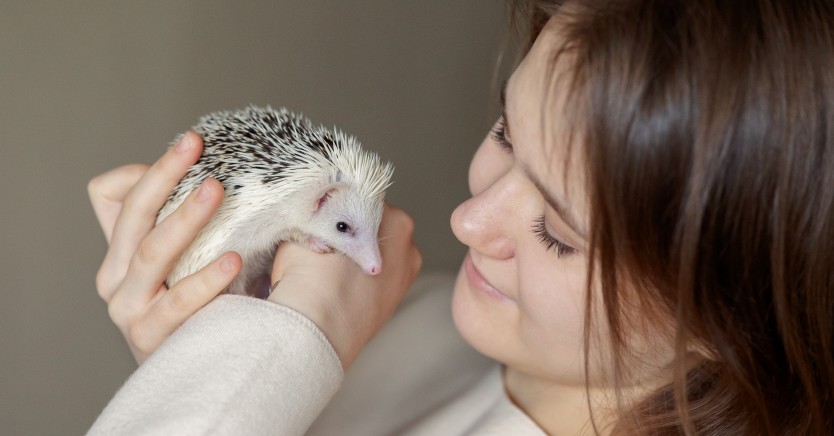
Hedgehogs replace their spines approximately every 18 months. However, this occurs individually, with just a few at a time, so you should not be seeing patches with visible loss of spines. When you start to see patches, visible thinning of the spines along the back, or more than a couple of spines in the bottom of the cage, there is most likely a medical cause.
The Most Likely Cause of Spine Loss in Hedgehogs: Mites
The loss of spines is almost always due to an underlying skin issue. Caparinia tripilis is the most common mite found in hedgehogs. This mite lives on the skin in most hedgehogs, but the immune system keeps numbers low enough that they don’t cause any issues. When a hedgehog becomes stressed, sick, or is not being housed or fed appropriately, these mites will overgrow and cause skin issues.
Signs of Mites in Hedgehogs
In addition to spines falling out, the skin looks thick and flaky. There may be white or brownish crusts at the base of the spines and around the eyes. These are the fecal droppings of the mites. Some hedgehogs will be really itchy, and you will see them rubbing or scratching.
How to Treat Mites in Hedgehogs
Treatment for mites is either a topical parasiticide applied every 30 days or an injection given under the skin every 14 days for 3-5 doses. These medications are prescription only and must be prescribed by a veterinarian.
Treating the hedgehog may not be enough to resolve the infection. The adult mites living on the hedgehog are killed by the treatment, but eggs can be found in the bedding. The eggs hatch and can re-infest the hedgehog. To get rid of the eggs, remove the bedding from the cage. Line the bottom of the cage with newspaper and change it daily until the mite problem is resolved.
If you have more than one hedgehog, they should all be treated, regardless of whether or not they are showing signs of mites. Caparinia tripilis mites do not like to live on other species or humans, so you don’t have to worry about spreading them to your other pets.
Scabies
Less commonly, hedgehogs can become infected with Sarcoptes spp. (also known as Scabies). Sarcoptes mites are not picky about their host. They can infect other animals in the household as well as people. Ask your veterinarian about treating other animals in the household and talk to your doctor if you develop a rash or itchy bumps.
Other Causes of Spine Loss in Hedgehogs
Ringworm
Ringworm is another common cause of spine loss and scaly skin in hedgehogs. Ringworm is caused by a dermatophyte fungal infection. It often occurs secondary to something else affecting the skin, such as trauma to the skin (cuts, scrapes, bites, or other wounds) or a mite infestation. There are a number of treatment options for ringworm, including topical sprays and shampoos, oral medications, or a lime sulfur bath. Your veterinarian can help determine what treatment is best for your hedgehog. Ringworm can spread to other animals and people so limited handling, proper hygiene, and isolation from other animals is important to prevent spread.
Skin Cancer
Hedgehogs can also develop skin cancer, leading to spine loss. However, in most cases this is in a focal area of spine loss that is often associated with a mass.
For Proper Diagnosis and Treatment, Visit Your Vet
With your little hedgie, the stress of moving to a new home may have led to a mite infestation. Please schedule a visit with your veterinarian for a proper diagnosis and treatment plan. If your vet appointment isn’t for a few days, you can start taking precautions at home. Remove the bedding from his cage, disinfect all his toys, feed, and water bowls, and isolate him from other pets. Minimize handling of him. When you need to handle him, use gloves and wash your hands thoroughly after. The good news is that once the underlying skin problem has been resolved, the spines should grow back.
Ready to start saving money on pet wellness care?
Then take a look at Mint Wellness, the pet wellness plan that provides fast reimbursement on routine pet care. Save on vaccinations, wellness exams, preventatives, dental, and more!
Learn More