Ask Dr. Jenn: Does My Norfolk Terrier Need a Doggie Coat in Cold Weather?
With the weather getting so cold, I'm worried about my Norfolk terrier. This breed has an undercoat and topcoat. Does she still need to wear a "doggie coat" in cold weather?
A terrier’s double coat helps protect him from the elements. The shorter inner coat provides insulation to keep him warm in the winter and cool in the summer. The wiry outer coat helps keep the coat dry in rain and snow as well as providing protection against insect bites, burs, and plant thorns as he runs through tall grasses.
While the double coat will help your Norfolk terrier tolerate cold weather better than a chihuahua with a thin hair coat, whether he needs a doggie coat is dependent on other factors, including where you live, what climate your dog has acclimated to, and how long he will be outside.
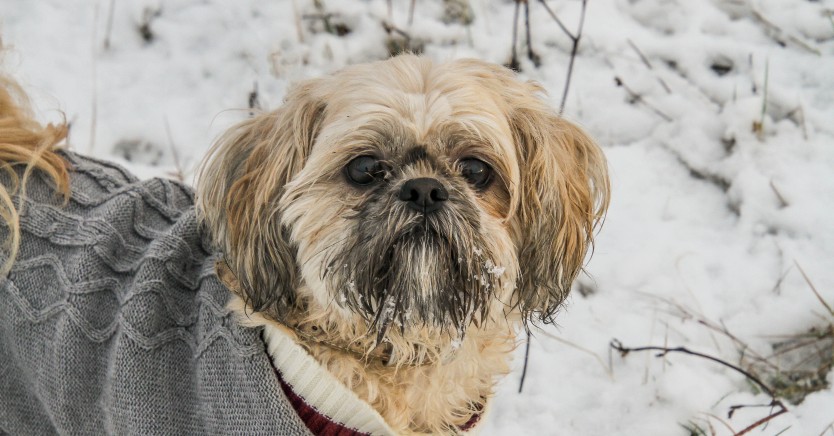
I live in Northern Minnesota where the winters are long and harsh. My little terrier mix is used to cold weather. Her body has adjusted to cooler temperatures with a thicker undercoat and a little extra fat under her skin to keep her warm. She has no problem going for an hour long walk in 20-degree weather. But last week, when the temperature dipped to minus twenty-five degrees Fahrenheit, Rey put on her cute little sweater and spent a grand total of 45 seconds outside, just long enough to empty her bladder.
If you live someplace warmer, such as central Florida, your Norfolk terrier probably has not had a chance to acclimate to colder weather. When the temperature drops below freezing, he probably would appreciate a coat.
Maybe you live somewhere in the middle of these two climates. As the temperature starts to decrease in the fall months, his body will acclimate and prepare for cooler temperatures. During the winter, he likely will be comfortable outside without a coat for 20-30 minutes during average temperatures. When the temperature drops significantly lower than what you are used to, your dog would probably appreciate a coat.
Another thing to consider is your dog’s age. As dogs get older, their bodies don’t tolerate the cold as well. They may have arthritis that is aggravated in colder temperatures or not as much body fat and muscle to keep the heat in. Their haircoat may be thinner from hormonal conditions. If your dog is shivering, it’s too cold for him.
Keep in mind that coats and sweaters keep your dog’s core warm, but not the extremities. In these colder temperatures, you likely have a hat, gloves, and boots, but your dog’s feet and ears are exposed to the cold and are more suspectable to frost bite. If he starts lifting his paws up when he is walking, his feet are cold and it’s time to go back inside.
You can look into doggy booties to match his coat, but they may not be the best investment. I have seen a lot of pet parents trying to use boots on their dogs. A lot of dogs will not tolerate them: they refuse to even try and walk. The ones that wear them often lose one or two midstride. It’s not completely hopeless. Every few days, I see the rare dog that prances in with all four booties on and no complaints. Earlier this week my patient even had a hat on, complete with a pom-pom on top.
Ready to start saving money on pet wellness care?
Then take a look at Mint Wellness, the pet wellness plan that provides fast reimbursement on routine pet care. Save on vaccinations, wellness exams, preventatives, dental, and more!
Learn More